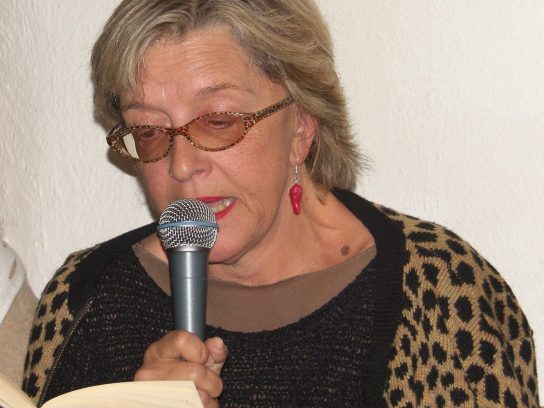
Bernard Charbonneau (1910–1996) was a pioneer of the ecology movement and a fierce critic of the tourism industry, which he argued came from an authentic desire to escape the city, but which brought with it exactly what tourists were trying to escape.
Articles
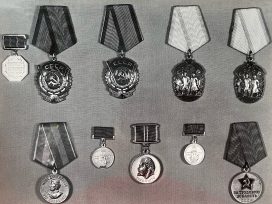
Impunity creates impunity
On the continuity of terror and war in Russia
Even in the fifth year of Russia’s full-scale war on Ukraine, a deep-rooted moral paralysis prevents the Russian opposition from demanding justice for the crimes committed by the state both during Soviet rule and since.

Against the backdrop of the ‘special operation’ in Ukraine and a historically low birth rate, the authorities in Russia are waging an unprecedented campaign against the right to choose to be a mother.

Jan Patočka’s underground writing on human rights cemented his involvement in Charter 77. But the Czech philosopher’s resistance against communist oppression, written in secret, needed Krzysztof Michalski and his youthful conviction to surface. Tracking the months before Patočka’s post-interrogation death reveals how individual and collective suffering and compassion marked the movement.
Recommended topics

Far-right disinformation targeting Roma communities in Bulgaria and Romania taps into existing fears of discrimination, doubling up prejudice. Can community support bring the much-needed equilibrium to restabilize progressive social programming?

Revisiting Georgia’s history of higher education offers a way of understanding both the country’s European aspirations and the obstacles that stand in their way, says the rector of Tbilisi’s Ilia State University.

How do you write the history of a displaced society when sites of memory have been destroyed, libraries looted, and archives made inaccessible? Tracing the evolution of Palestinian historiography is to analyse responses to this enduring challenge.
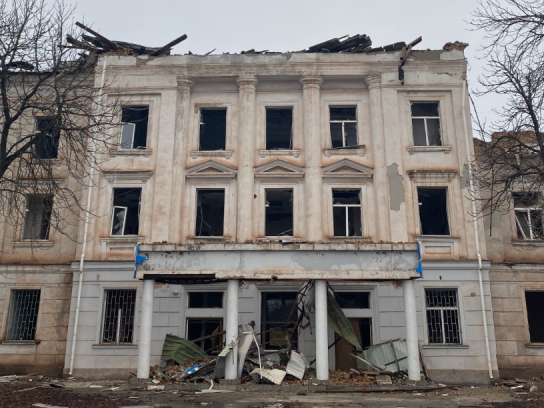
When citizens are the targets of direct military action, humanity suffers alongside those under fire. First-hand insights of travelling to Ukraine’s war zones are reminders of just how close Russia’s ongoing war is.
Eurozine review
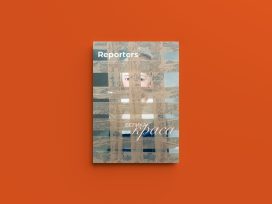
Beauty at the threshold
Reporters 15 (2026)
On the rituals of prisoner exchange; a village priest who became an adoptive father of six; a wedding costume to be worn into the grave; the field hospital as a place between life and death.
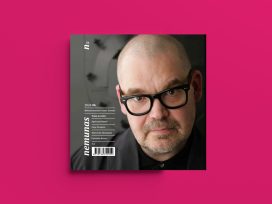
Moulding space
Nemunas 6/2026
An interview with Tomas Grunskis, a philosopher of architecture; the renaissance of Lithuanian film; Warhol and Beuys; body intelligence.
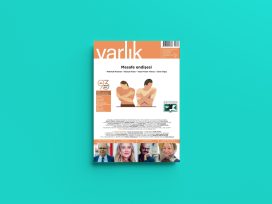
The anxiety of distance
Varlık 7/2026
Profiles without selves, or boycott Facebook now; Sartre, Heidegger and Whatsapp; a biography of Orhan Veli, one of Turkey’s great 20th-century poets.

Focal points

Cultural reflections on contemporary warfare: from sanctions, human rights abuses and peace negotiations to recruitment, rearmament, autonomous weapons and civil protection mechanisms.
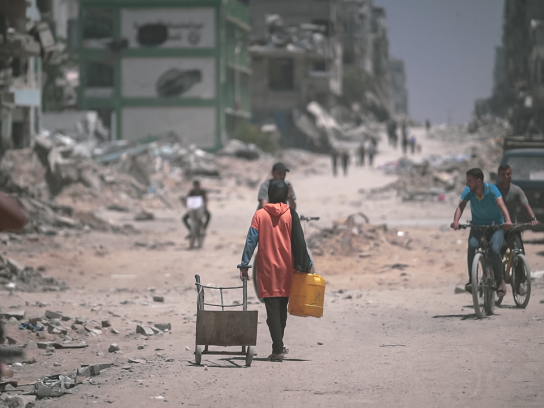
An ongoing series in Eurozine discussing questions raised by the 7 October Hamas attacks and Israel’s devastating war on Gaza. The series offers a sample of articles published in the wider Eurozine network and represents diverse perspectives, above all Palestinian and Israeli.
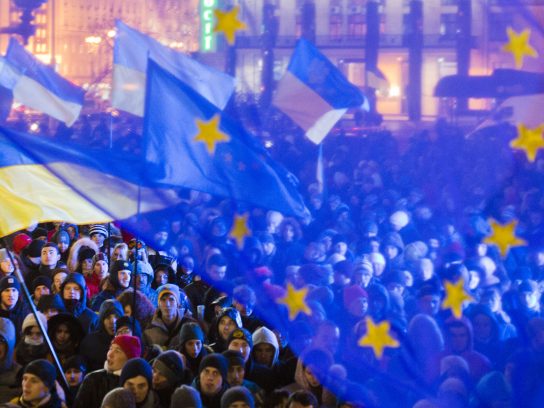
Post-revolutionary Ukrainian society displays a unique mix of hope, enthusiasm, social creativity, collective trauma of war, radicalism and disillusionment. With the Maidan becoming history, the focal point ‘Ukraine in European Dialogue’ explores the new challenges facing the young democracy, its place in Europe, and the lessons it might offer for the future of the European project.
Inspired by a lecture that Clifford Geertz delivered in 1995 at the Institute for Human Sciences in Vienna, this focal point engages with ‘deep diversity’, ‘a sense of dispersion, of particularity, of complexity and of uncenteredness’ rather than unified world order. It follows the launch of a research programme of the same name at the institute in January 2023.