
The anxiety of distance
Varlık 7/2026
Profiles without selves, or boycott Facebook now; Sartre, Heidegger and Whatsapp; a biography of Orhan Veli, one of Turkey’s great 20th-century poets.
Profiles without selves, or boycott Facebook now; Sartre, Heidegger and Whatsapp; a biography of Orhan Veli, one of Turkey’s great 20th-century poets.

Against the backdrop of the ‘special operation’ in Ukraine and a historically low birth rate, the authorities in Russia are waging an unprecedented campaign against the right to choose to be a mother.

Jan Patočka’s underground writing on human rights cemented his involvement in Charter 77. But the Czech philosopher’s resistance against communist oppression, written in secret, needed Krzysztof Michalski and his youthful conviction to surface. Tracking the months before Patočka’s post-interrogation death reveals how individual and collective suffering and compassion marked the movement.

How do you write the history of a displaced society when sites of memory have been destroyed, libraries looted, and archives made inaccessible? Tracing the evolution of Palestinian historiography is to analyse responses to this enduring challenge.

Far-right disinformation targeting Roma communities in Bulgaria and Romania taps into existing fears of discrimination, doubling up prejudice. Can community support bring the much-needed equilibrium to restabilize progressive social programming?

Though the development is uneven, the direction of travel is clear, as coalitions between conservative and far-right parties become the more viable option at both the national and European levels.

Revisiting Georgia’s history of higher education offers a way of understanding both the country’s European aspirations and the obstacles that stand in their way, says the rector of Tbilisi’s Ilia State University.

As a writer, Slavenka Drakulić sought to evoke the life of the single individual in a way that made empathy possible, writes her friend Marci Shore.

With her concrete observations of everyday patriarchy, Slavenka Drakulić left a deep mark on a generation of women readers, writes her friend Marija Ott Franolić.
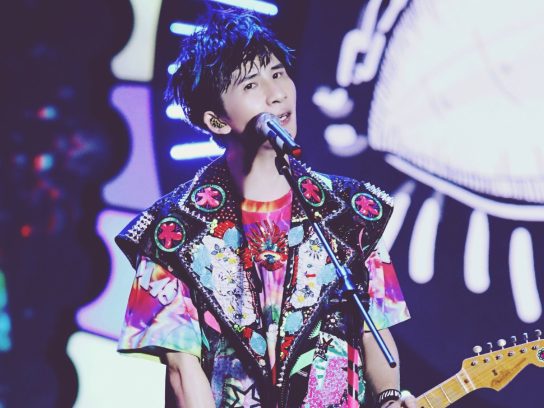
From late-90s punk to ‘Happyism’, the trajectory of former The Flowers front-man Wowkie Zhang exposes a dialectic typical of China’s mainstream: alternative impulses constantly surface, are monetised, then recur in new guises.
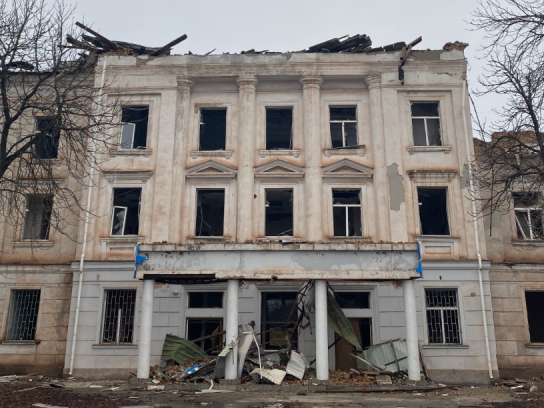
When citizens are the targets of direct military action, humanity suffers alongside those under fire. First-hand insights of travelling to Ukraine’s war zones are reminders of just how close Russia’s ongoing war is.
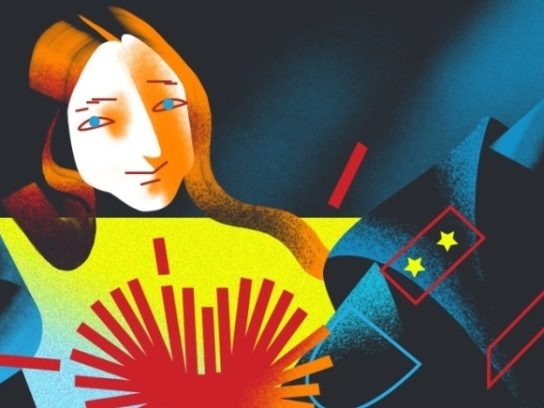
Women sentenced to time behind bars is on the rise under Putin. While male convicts are being offered their freedom to fight on the front line against Ukraine, even mothers with underage children aren’t being pardoned. For those incarcerated for anti-war activism or poverty-related crimes, solidarity campaigns provide crucial lifelines.

The writer and feminist Slavenka Drakulić will be remembered for the moral wisdom and humanity running throughout her work, writes her friend and former Eurozine editor Carl Henrik Fredriksson.
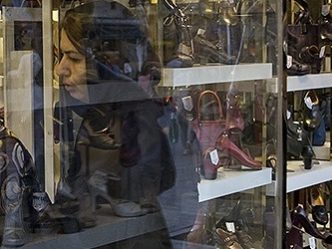
Talking with atheists and religious minorities explodes the myth of a homogenous Islamic Republic of Iran. But secular views remain otherwise concealed – some parents hiding their convictions even from children, who may not understand the need to lie for their safety.
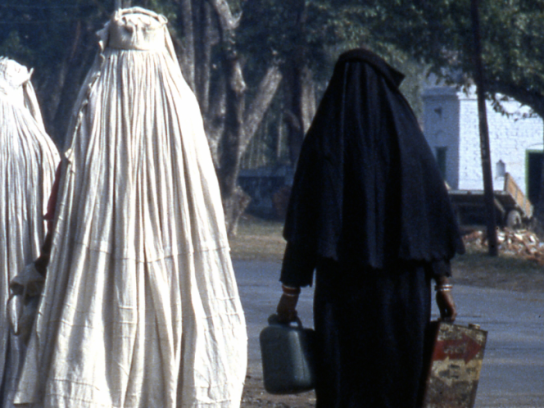
Contemporary Indian cinema depicts everyday lives improvising ways to overcome a divided society. A Hindu wearing a burqa to meet her Muslim lover becomes symbolic of personal contact surpassing fears of authority – a theme reflective of other cultures where religion and tradition take divisive roles.
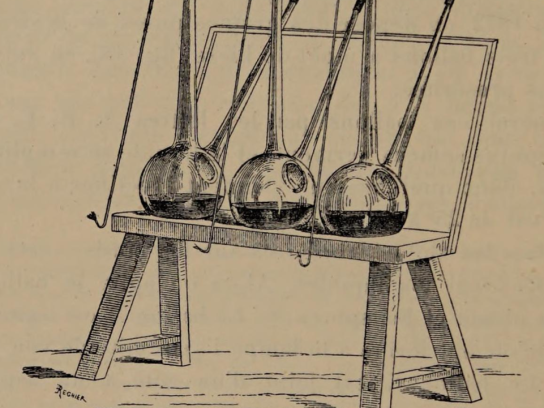
Darwin may have convincingly described the origin of species, but he was careful to avoid theorizing on life itself. Bold contemporaries meanwhile publicly pitted spontaneous generation, inspired by ‘the recipe for mice‘, with exhaustive experiments on broth. While Pasteur’s persistence was rewarded, the origin of life remains mysterious to this day.