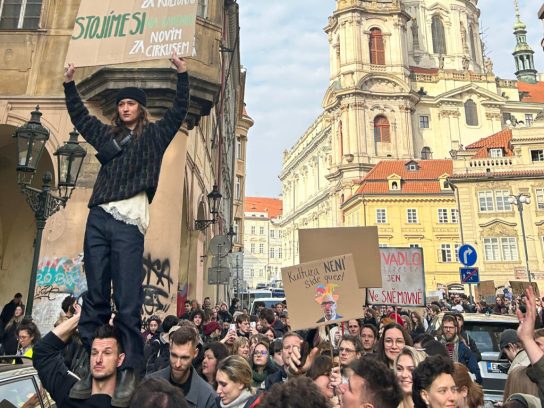
Precarity inflames tensions in Kenya. Youth-led demonstrations from 2024 and 2025 rallied against government corruption, hiked living costs and police brutality. With more than two thirds under 30, commentators portray young Africans as either a threat or a neoliberal dividend. But people-centred, environmental aspirations could be the proffered new wave.
Articles
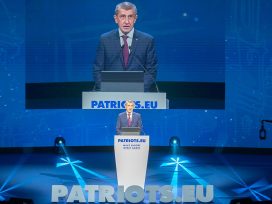
After Orbán’s defeat, Andrej Babiš remains the only member of the Patriots for Europe group with real power. But the Czech leader appears unwilling to succeed Orbán as figurehead of European illiberalism. Whoever emerges to fill the gap, Orbánism remains a political force.

Language in translation calls for all manner of adjustment from one culture to another. Georgian, from the unique family of Kartvelian languages, presents all manner of challenges and advantages: namely non-gendered grammar, single-word sentences and a tense especially for gossiping.

From Élisée Reclus and Peter Kropotkin to Rachel Carson, Murray Bookchin and André Gorz: the anarchist tradition understands ecology not as top-down conservation, but as practice of cohabitation.
Recommended topics

Since 2020’s ‘revolution with a female face’, Lukashenka has ramped up his neo-Soviet family policy while continuing to persecute women disobedient to his regime.

Despite a transatlantic exchange of far-right ideology, material interests are what bind the international of nationalists. Why transatlantic patterns in far-right strategy do not add up to a rightwing populist tide.

For the philosopher Harry Frankfurt, the essence of bullshit was not the intention to deceive but ‘indifference to how things really are’. But does that make bullshit worse than lies? Are we not all, sometimes, bullshitters?

Starving ethnic Ukrainians and Moldovans, fleeing 1930s collectivisation, became controversial refugees in Romania – if, that is, they survived Soviet riverside gunfire. The international press and politicians expressed outrage – until the Nazi regime became a greater threat, leaving Holodomor sufferers overshadowed by distant enthusiasm for Stalin’s Five-Year Plan.
Eurozine review

Narrative Apocalypse
Mittelweg 36 2/2026
End-times narratives and the end of narrative: storytelling as story-selling; zombie fiction for Derrideans; resisting teleology.
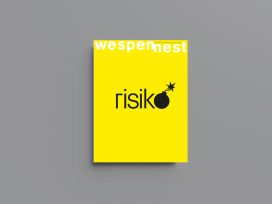
Risk
Wespennest 190 (2026)
Beyond Beck’s risk society; manufacturing uncertainty; leftist survivalism; Dufourmantelle vs. Anders; love, risk and polyamory.
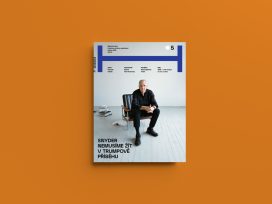
Havel in Davos
Host 5/2026
How the Iranian regime co-opts women’s football; Snyder on Carney’s Havel; a poet on the beauty of sign language.

Focal points

Cultural reflections on contemporary warfare: from sanctions, human rights abuses and peace negotiations to recruitment, rearmament, autonomous weapons and civil protection mechanisms.
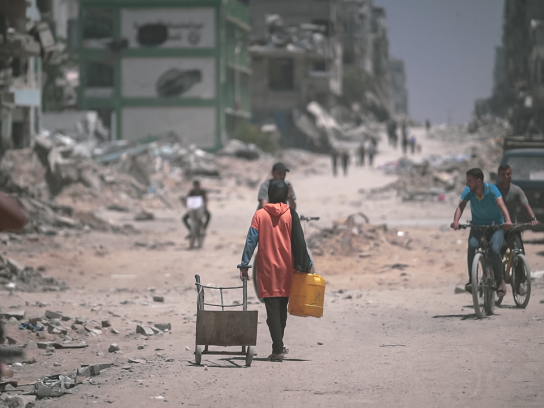
An ongoing series in Eurozine discussing questions raised by the 7 October Hamas attacks and Israel’s devastating war on Gaza. The series offers a sample of articles published in the wider Eurozine network and represents diverse perspectives, above all Palestinian and Israeli.
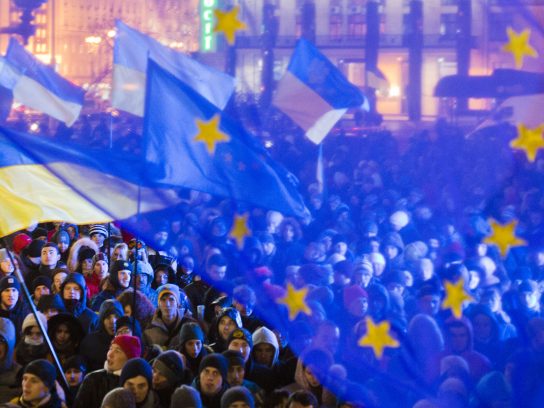
Post-revolutionary Ukrainian society displays a unique mix of hope, enthusiasm, social creativity, collective trauma of war, radicalism and disillusionment. With the Maidan becoming history, the focal point ‘Ukraine in European Dialogue’ explores the new challenges facing the young democracy, its place in Europe, and the lessons it might offer for the future of the European project.
Inspired by a lecture that Clifford Geertz delivered in 1995 at the Institute for Human Sciences in Vienna, this focal point engages with ‘deep diversity’, ‘a sense of dispersion, of particularity, of complexity and of uncenteredness’ rather than unified world order. It follows the launch of a research programme of the same name at the institute in January 2023.