When war entered the lives of Ukrainian schoolchildren, their teenage years were put on hold. In the first episode of the Knowledgeable Youth podcast, Ukrainian teens talk about finding their way in a new school system.
In May 2022, Iryna Khamayko started an educational center for Ukrainian teenagers seeking refuge in Austria after Russia’s full-scale invasion. The idea was clear: to ensure a safe educational environment, equip the students with the German language, and make sure they could continue their education.
Today, the Free People Educational Hub in Vienna is still open. Two of the school’s students, Lena and Maria, interview Irena Khamayko in this first episode of the Knowledgeable Youth podcast series. They discuss language barriers, the Austrian school system and the challenges of making friends in a new country.
This series is developed by students from the Free People Educational Hub– a school for young people from Ukraine based in Vienna, who have been displaced by Russia’s war on Ukraine. Together, they explore current themes in the social sciences, together with researchers.
This project was co-ordinated by Carine Chen (Eurozine) and Irena Remestwenski (RECET).
Knowledgeable Youth: Science Communication in Times of War is co-organised by Eurozine, RECET, Radio Orange and the Free People Educational Hub in Vienna. The project is funded by the Cultural Department of the City of Vienna. Read more about the project here: www.eurozine.com/focal-points/youth-project/.
Copyright by Roman Doroshenko
Published 22 July 2024
Original in English
In collaboration with

In focal points


Invest in insight!
After over 20 years of publishing for free, Eurozine needs your support to get through an exceptionally lean year.
Become a Patron and get exciting perks for your help!


Want to hear a human voice?
Listen and subscribe wherever
you get your podcasts.
Newsletter
Subscribe to know what’s worth thinking about.
Related Articles

Language and democracy
La Revue Nouvelle 2/2026

Losing privileges
Young people struggling with screentime
Related Articles
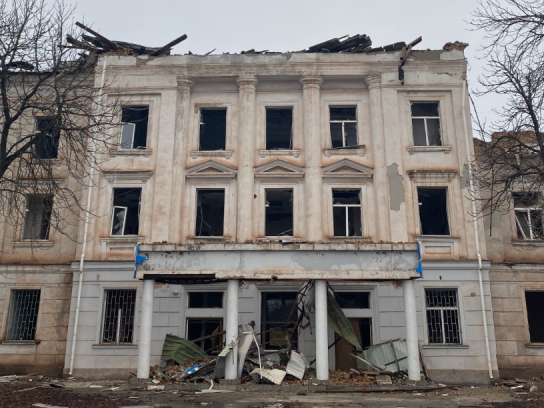
When citizens are the targets of direct military action, humanity suffers alongside those under fire. First-hand insights of travelling to Ukraine’s war zones are reminders of just how close Russia’s ongoing war is.

Winner of the prestigious Yuri Shevelov Prize for ‘Hemingway Knows Nothing’ at age twenty-five, Ukrainian soldier and writer Artur Dron’s relationships with literature and religion have already been tested to the max. In an interview with cultural journal ‘The Ukrainians’, he shares his honest reflections on defining moments that strip back the superfluous.