Freedom of speech under duress in Belarus, Poland and Ukraine
A discussion by New Eastern Europe
Poland is descending on a path toward more and more authoritarian tactics to curb independent journalism, while Belarus has long been enduring direct repression, especially since last year’s revolution. In Ukraine, however, the majority of mainstream media is owned by oligarchs, and public service is trying to gain ground to balance them out.
This online discussion is a continuation of a discussion held in July during the 2021 Eurozine Meeting titled ‘Watch your mouth: Journalism under duress’ which featured journalists from Russia, Turkey and Hungary. This time we will focus on three more countries that have been in the spotlight lately: Belarus, Ukraine and Poland.
Speakers:
Opening remarks by Joanna Stolarek, Director of the Heinrich-Böll-Stiftung Warsaw Office
Veranika Laputska (Belarus)
Vitalii Rybak, Internews (Ukraine)
Katarzyna Przyborska and Agniszeka Wisniewska, Krytyka Polityczna (Poland)
The discussion is co-moderated: Réka Kinga Papp (Eurozine) and Adam Reichardt (New Eastern Europe).
Here you can see previous discussions in this series of talk on the topic of press freedom and editorial integrity: Watch your mouth: Journalism under duress”
The discussion is organized by The Jan Nowak-Jezioranski College of Eastern Europe the publisher of New Eastern Europe, together with Eurozine and in partnership with the Jagiellonian University Institute of European Studies. Funding for this discussion is provided in part by the Heinrich Boell Foundation’s Warsaw Office.
Published 28 October 2021
Original in English
Published in

Invest in insight!
After over 20 years of publishing for free, Eurozine needs your support to get through an exceptionally lean year.
Become a Patron and get exciting perks for your help!


Want to hear a human voice?
Listen and subscribe wherever
you get your podcasts.
Newsletter
Subscribe to know what’s worth thinking about.
Related Articles


When human rights end
New Eastern Europe 3/2026

Related Articles
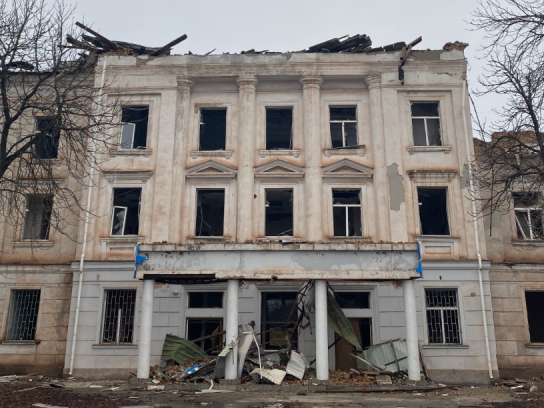
When citizens are the targets of direct military action, humanity suffers alongside those under fire. First-hand insights of travelling to Ukraine’s war zones are reminders of just how close Russia’s ongoing war is.