Refusing victimhood and commanding attention
Well-intentioned appeals from the collective West to encourage cultural dialogue between victim and aggressor reflect existing power structures. Reconciliation, Kateryna Botanova explains, cannot be imposed from outside.
Ukrainian artists are pressured by their international peers who still entertain the naive idea that the purpose of culture is reconciliation.
They have to push back against these initiatives, but walk a tightrope as they need to nevertheless keep western attention, says Kiyv-born curator and art historian Kateryna Botanova, who is also a recurring Eurozine author.
This episode is an edited version of a longer conversation, which is available in its entirety only to our Patrons. You can get access to the full episode, and more giveaways by becoming a Patron for as little as €5 a month on Patreon.
Read Kateryna Botanova’s articles in Eurozine, including the two she discusses in this episode:


Defined by silence
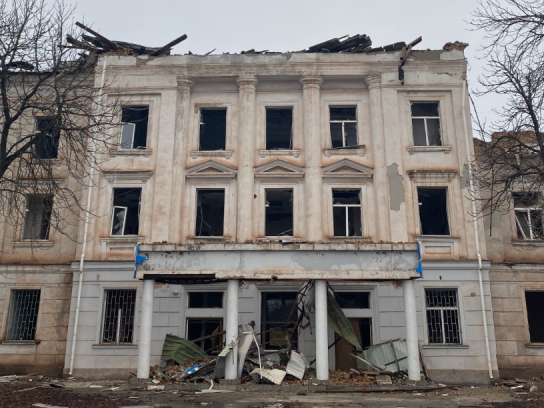
The Ukrainian art that was destroyed – and the art that never happened
Please subscribe to Gagarin on Spotify, Apple podcasts, Castbox, Stitcher, Soundcloud or wherever you get your podcasts, and leave a review so more people can find us. You can also subscribe to our newsletter, so you’ll always know what’s truly worth thinking about.
Published 10 March 2023
Original in English
First published by Eurozine
© Eurozine
PDF/PRINT
Invest in insight!
After over 20 years of publishing for free, Eurozine needs your support to get through an exceptionally lean year.
Become a Patron and get exciting perks for your help!


Want to hear a human voice?
Listen and subscribe wherever
you get your podcasts.
Newsletter
Subscribe to know what’s worth thinking about.
Related Articles

Related Articles

Starving ethnic Ukrainians and Moldovans, fleeing 1930s collectivisation, became controversial refugees in Romania – if, that is, they survived Soviet riverside gunfire. The international press and politicians expressed outrage – until the Nazi regime became a greater threat, leaving Holodomor sufferers overshadowed by distant enthusiasm for Stalin’s Five-Year Plan.

When human rights end
New Eastern Europe 3/2026
Why human rights still matter, of course; Lukashenka’s neo-Soviet sexism; Ukraine’s election dilemma.