

Since the mass protests in Belarus in 2020, the Lukashenka regime has undergone a totalitarian transformation. Its many instruments of repression serve a single end: to prevent civil society from becoming the driving force of another revolution.
Portugal’s growing home insemination industry; 15 years of same-sex marriage; the ‘kingfishermen’ return to Portuguese rivers.
The features published over the past six months in English translation by the Portuguese cultural journal Gerador show its commitment to longform, in-depth multimedia journalism.
In October, Sofia Craveiro reported on women in Portugal who are seeking alternatives to overloaded and inefficient public artificial insemination services and the prohibitive costs of private treatment. The situation is leading to a rise in the number of would-be mothers attempting unsupervised insemination at home, using cheap kits bought online. Social media groups are connecting women with potential donors, taking the process beyond professional and regulatory oversight – with the attendant health risks and legal concerns.
While Portugal’s national health service offers free treatments, access is limited to women below a certain age and waiting lists are prohibitively long. Many regions lack public fertility centers and donations can only be made in Porto, Lisbon, or Coimbra, which limits sperm stocks. Many of those interviewed by Craveiro cited the high costs of private clinics for their decision to seek home insemination instead of medically assisted procreation: ‘In some cases, people tried clinics once or twice, but the prohibitive prices led them to give up and seek alternatives’, she writes.
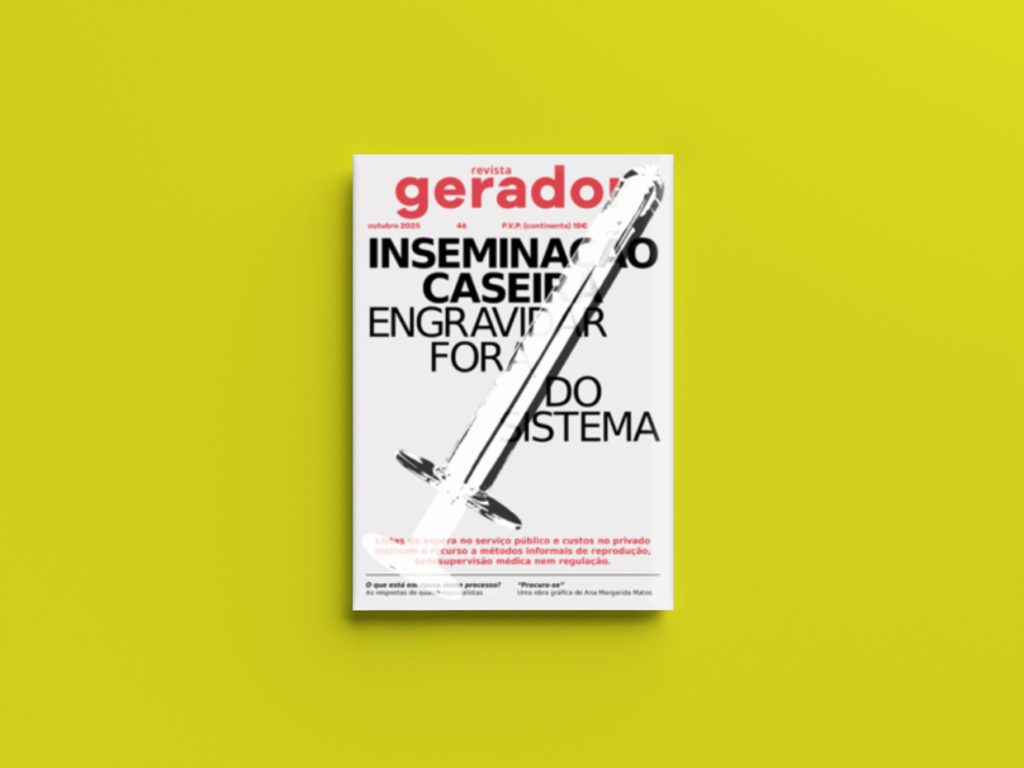
While ‘there is no concrete data on the prevalence of this practice, either nationally or internationally’, lesbian women have been sharing information about home insemination since the 1970s. Today, however, online social networks are the central means for connecting donors and those trying to conceive, with membership of groups on WhatsApp and other platforms ranging ‘from tens to tens of thousands’. It is also seen as ‘a form of emancipation for women, who in this way take the reins, bypass patriarchal structures, “mandatory mediation” and the “pathologization of the process”.’
However, home insemination comes attached with certain dangers. There are health risks associated with the lack of a hygienic environment and sterile material, including the risk of sexually transmitted infections (STIs), infection and injury to the genital tract, and even genetic diseases, for which officially sanctioned donors are screened. From a legal perspective, home insemination contravenes Portuguese regulation and could be considered illegal. One expert highlights the consequences for mothers, who ‘will not have access to maternity leave, in addition to having no parental rights.’
In a related article, Sofia Craveiros assesses the impact Portugal’s 2010 adoption of legislation recognizing LGBTQI+ marriage, charting the LGBTQI+ community’s long struggle for the right to wed and the impact the ruling has made on society.
Among the married LGBTQI+ people whom Craveiro talks to are Teresa Pires and Helena Paixão, whose landmark efforts to get married in 2006 with the backing of a progressive lawyer were rejected. The media attention they received made them ‘a symbol of the fight for LGBTQI+ rights, even though that was not their intention’. While in subsequent years the couple and their daughter suffered prejudice, evictions and bullying, their actions set in motion a process that resulted in the legalization of single-sex marriage in Portugal in 2010.
Civil marriage ‘brings with it a set of rights that, before 2010, were denied to the LGBTQI+ population’, including inheritance rights, division of assets and joint access to health insurance, and the right for partners to participate in the resolution of medical problems and life-or-death decisions. Alongside such rights, LGBTQI+ couples also cited the need to make a political statement in their social circle and a desire to contribute to the statistics as reasons for their decision to get married.
Although the 2010 law did not give LGBTQI+ couples access to the right to adoption to medically assisted procreation, which were granted only six years later, ‘activists and researchers are unanimous in recognizing the impact that the law has had on society’. But while the legitimacy conferred by civil unions has advanced the cause of tolerance, the fight is not over. ‘For many couples, it is still a necessary political statement’.
In a four-part multimedia longread including video interviews and documentary footage, Inês Loureiro Pinto tells the story of Portugal’s ‘kingfishermen’ – river wardens who once patrolled the banks of the country’s waterways and are now making a comeback.
Established in 1892 by royal decree, the profession involved a range of duties, including overseeing compliance with river laws, monitoring works along waterways and issuing fines, as well as conservation services. ‘Walking along the riverbanks was a predominantly solitary job, except for interactions with the community, conflict resolution, or guiding the work of the ditch masters and road workers’, writes Pinto.
Pinto interviews several of the river rangers who patrolled the Xarrama River in the Alentejo region, before the profession was abolished in 1995. But in the last decade, faced with increasing pollution and the need for environmental and structural rehabilitation, the authorities have begun recruiting a new generation of river wardens. In the 21st century, the role exists in a different context, writes Pinto: ‘The impact of human activity on ecosystems and water resources, essential to life and countless economic activities, is well known’.
Review by Alastair Gill
Published 28 January 2026
Original in English
First published by Eurozine
© Eurozine
PDF/PRINT
After over 20 years of publishing for free, Eurozine needs your support to get through an exceptionally lean year.
Become a Patron and get exciting perks for your help!


Want to hear a human voice?
Listen and subscribe wherever
you get your podcasts.
Subscribe to know what’s worth thinking about.


Since the mass protests in Belarus in 2020, the Lukashenka regime has undergone a totalitarian transformation. Its many instruments of repression serve a single end: to prevent civil society from becoming the driving force of another revolution.

Queer, migrant and ethnic minority communities in Slovakia after ’89: homophobia and structural racism versus integration and upward mobility.